

Change strategy for Atlant-M automotive holding: consulting, audit, and selection of a CRM system
Atlant-M is an official Volkswagen dealer with over...
View more
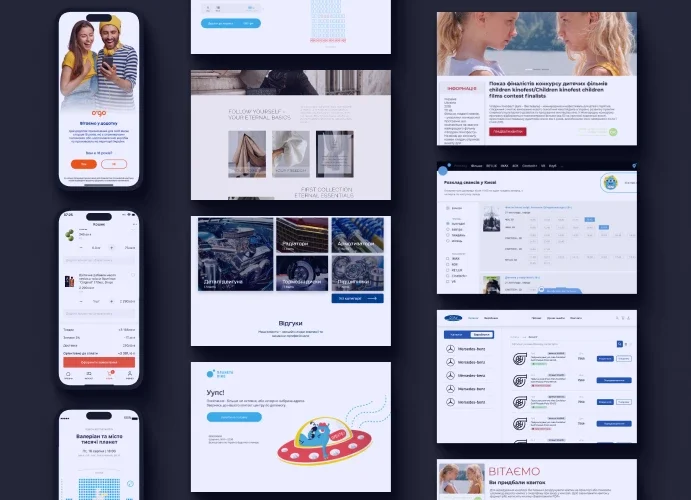
Experience Overview
Online store development begins with the logic of the customer journey: from catalog and product selection to payment, delivery, and repeat purchase. A slow page means losing a customer. Inconvenient payment means losing a sale. No analytics means losing control. Delivery confusion means losing trust.
We design systems where everything is integrated: logistics, payments, accounting, CRM, BI. These elements should not exist separately – everything must work synchronously. Otherwise, the business does not scale and gets stuck at a level where everything depends solely on managers.
We create e-commerce solutions that withstand load, adapt to your segment, provide real-time analytics, and allow you to see every customer action, including which advertisement they came from and what ultimately generated profit.
An online store must operate without failures, be available 24/7, and grow alongside the business. For a simple test launch, a ready-made builder where you can create an online store for free is sometimes sufficient. Complex sales scenarios require dedicated design and integrations.
We build online stores as complete e-commerce systems: from architecture to launch, from the first version to a full-fledged store with thousands of items. We account for real business processes, accounting, logistics, and marketing.
A marketplace is like a large digital shopping center: someone sells, someone buys, someone manages. And everyone sees their part of the system. Sellers upload products, administrators monitor commissions, buyers want fast payment and delivery.
For such a platform to work, every scenario must be thought through to the smallest detail. We create marketplaces with flexible logic where everything is organized by roles: from seller dashboard to moderator panel. Taking into account currency rates, tax differences, and even who pays for what at the return stage.
B2B sales have their own logic: the client expects their own terms, their own prices, and their own payment method. Someone orders 500 items at once, someone expects an invoice with VAT, someone works only within credit limits.
We create B2B platforms and B2B stores that automate work with dealers and wholesale clients.
If a customer has installed your app, it's already a sign of trust. They have direct access to orders without a browser or third-party platforms and can return to purchase faster.
We create e-commerce apps for iOS and Android as a separate sales channel, synchronized with the website and internal business systems.
Customers don't divide the company into website, store, and app – for them it's all one experience. Bought online – returned offline. Received a promo in the app – expects it to work in the store. And for this to work, the system must be unified: by data, orders, customers, and loyalty.
We build omnichannel solutions as a unified digital ecosystem where the website, mobile app, marketplaces, and offline sales operate with synchronized data. CRM and ERP integration synchronizes customer data, orders, prices, and inventory across channels.
Every click, view, purchase, or return on an e-commerce platform is a signal that needs to be not just collected but understood and properly used.
We help businesses build e-commerce analytics as a separate management layer: from traffic source to profitability of each product line. We collect data from the website, CRM, warehouse, and marketing platforms and show what sells, who buys, which channels pay off, and where profit drops.
Technologies
Our Approach:
The main goal is to create a convenient, beneficial, and functional product for the user.
Before starting work, we pay attention to clearly defining functionality.
Competent design helps optimize development costs. We consider potential product scalability in advance.
We create an intuitive and useful product for the end user.
Team interviews: what, to whom, how, and why we sell.
Goal definition: sales growth, purchase frequency, LTV.
Audit of current IT infrastructure, if available.
Interaction map: e-commerce, CRM, ERP, logistics, loyalty.
UX frameworks and user scenarios.
Technical design of integrations and process logic.
Online store, marketplace, or B2B portal.
Customer/partner dashboards.
Special conditions: roles, pricing, payments, taxes, languages.
Synchronization with CRM, ERP, warehouses, payment, delivery.
Loyalty program, email/push marketing.
BI/dashboard integration for analytics.
Stress testing: load, processes, UX.
Verification of all order points: from product to return.
Analytics integration: we evaluate not only order presence but also customer behavior, bottlenecks, and efficiency of each stage.
Feature expansion, speed and UX optimization.
New channel integration (mobile, offline, new regions).
Analytics → hypotheses → implementation → growth.
Atlant-M is an official Volkswagen dealer with over...
View more
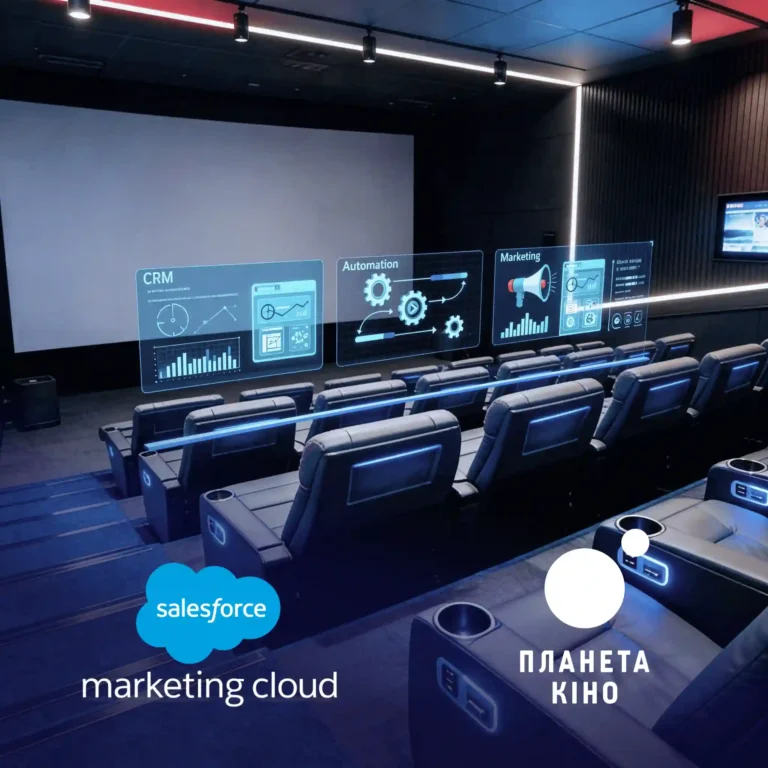
Personalized customer engagement platform for Planeta Kino based...
View more
SWEET.TV is one of the most powerful Ukrainian...
View more
Good Wine is a cult Ukrainian brand that...
View more
Planeta Kino is a modern Ukrainian cinema chain...
View more
When we start working with world-class companies, we...
View more
Looking for a reliable technical partner? We are ready to join your project at any stage – from idea to launch.

Fill out the form, and we will contact you to discuss the project.

Senator Business Center, 32/2 Knyaziv Ostrozkykh St. Kyiv, Ukraine, 01010