
Microsoft Fabric + Data Platform for Enterprise
Microsoft Fabric for large enterprises: IWIS expertise transforms scattered data into a unified platform for management and decision-making
Schedule a diagnosticWhat businesses gain after implementing a Data Platform
A large company means dozens of systems, each holding its own piece of business information. A unified data platform (enterprise data platform) brings these fragments into one environment that supports all company analytics, automation, and AI. The solution is built on Microsoft Fabric and IWIS expertise for businesses in Ukraine.

Single source of data
Enterprise-level data consolidation from all company systems occurs automatically: ERP, CRM, finance, and production flow into a unified analytical platform. Each department works with one current picture without manual reconciliation.

Speed of decision-making
A management report that previously required several days of preparation is now generated automatically. Executives receive current data when they actually need it.

KPI control
The platform consolidates performance indicators across all management levels in one environment, from operational metrics to strategic owner objectives. Everyone sees their KPIs in real time, without requesting data from analysts.

Scalability
When the business enters a new market or adds a division, the platform adapts without a complete architecture overhaul. Scalability is built into the solution from day one.

AI and forecasting
OneLake stores all company data in a single repository for all analytics, predictive models, and AI tools. The transition from reporting to forecasting requires no separate infrastructure.

Less manual work
Automated data integration and updates free the team from routine tasks. Analysts focus on interpretation and decisions instead of consolidating spreadsheets.
Signs
Why large companies lose efficiency due to data chaos
Large businesses have abundant data, but few manage it systematically. Fragmented systems, information duplication, and manual reporting create data chaos that quietly costs companies time, money, and decision quality.
What we implement
Discovery, audit, and architecture
Platform based on Microsoft Fabric

Data source integration
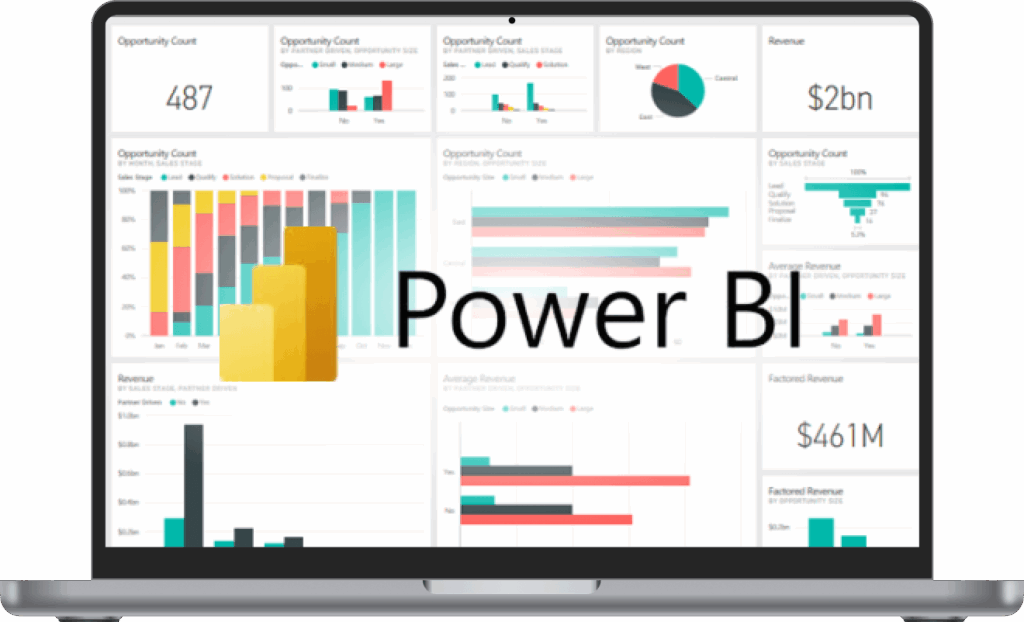
BI dashboards
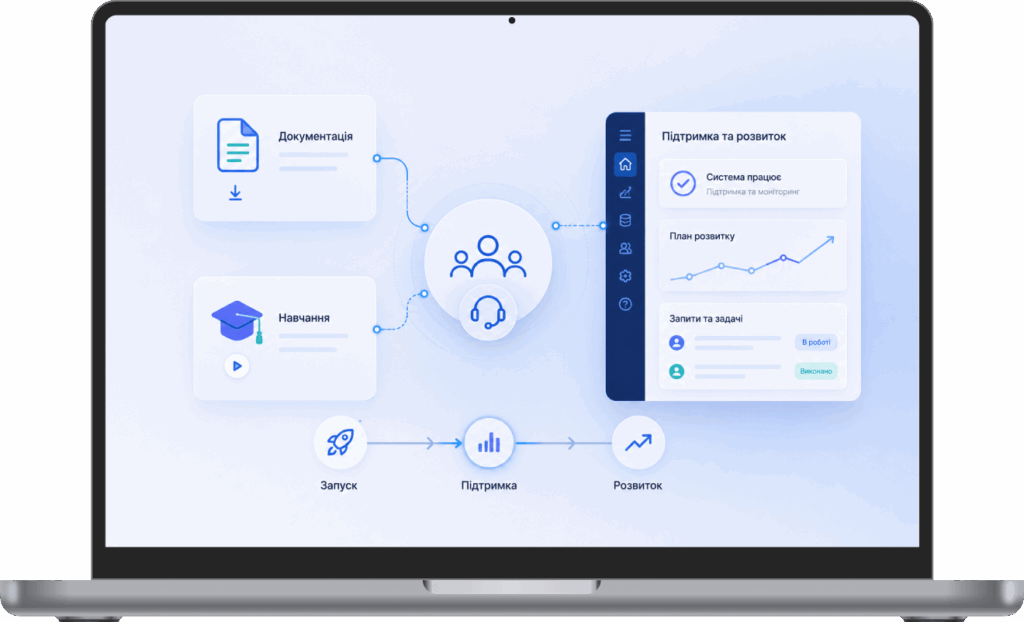
Documentation, training, and support
What tasks the Data Platform solves
One platform covers analytics for all business divisions—from finance to production. Instead of a dozen fragmented reports, executives receive a unified system where every figure is connected to the rest.
Management analytics
One screen instead of separate reports from each department.
- Consolidated business picture across all divisions and legal entities.
- Key company indicators in one environment, accessible from any device.
- Control of strategic goal execution with detailed breakdown to the cause of deviation.

Financial analytics
The CFO sees the company’s financial picture in figures that require no additional verification.
- P&L and Cash Flow based on consolidated data from all systems.
- Profitability in dimensions that were previously inaccessible due to fragmented sources.
- Faster period closing: data is already collected, reconciled, and aligned.

Marketing Analytics
Marketing campaigns and actual sales are finally viewed in one coordinate system.
- ROI and ROMI linked to actual revenue.
- Complete customer journey through integration of CRM, sales, and marketing platforms.
- CAC and LTV calculated on complete company data.

Operational Analytics
Production, logistics, and inventory become visible to the management team in real time.
- Operational indicators from all production and warehouse systems.
- Connection of operational metrics to financial results.
- Identification of bottlenecks before they become losses.

Predictive Analytics
The platform’s historical data becomes the foundation for planning the business’s next steps.
- Forecasting demand, sales, and cash flows based on the platform’s historical data.
- Scenario modeling: how financial results will change under different management decisions.
- Early detection of trends and deviations before they impact performance.

AI scenarios
Copilot and AI tools connect directly to platform data, without separate infrastructure preparation.
- Automatic anomaly detection in indicators across all divisions.
- AI assistants answer management questions based on complete company data.
- Recommendations and forecasts become part of the team’s daily work.

5 steps from discovery to system launch
Fabric implementation (Microsoft Fabric) is a managed process with predictable results at each stage.
Discovery and data audit
We analyze how data management currently works: what decisions are made, on what basis, and where gaps occur. We verify the state of data in systems: completeness, quality, reliability.
Architecture and roadmap
We design the target architecture: data warehouse, integration flows, access model. We establish an implementation plan with priorities, from the division with the greatest management pain to full coverage.
Data Platform construction
We deploy the environment, connect sources, build the Lakehouse/Data Warehouse and ETL processes: cleansing, alignment of indicator calculation methodology, quality control. This is the platform's core, on which trust in every figure depends.
BI and analytics
We develop dashboards for each management level. If the company already has Power BI reporting, the transition to Microsoft Fabric and integration of existing dashboards into the new platform occurs without losing existing work. We have solved similar management tasks many times—you can review IWIS case studies for Stonelight, Servier, and Planeta Kino.
Training and launch
The client's team receives documentation and training for independent work. After launch, the platform evolves with the business: new sources, divisions, and users are added without reworking the solution. The next step on the established data foundation is often turnkey business process automation.
A unified data platform is for you if…
You are an enterprise company: manufacturing, FMCG, retail, e-commerce, logistics, distribution, or financial sector
The company has 50+ employees
Data exists in multiple systems simultaneously
Reporting is complex, generated manually, or with delays
Analytics need to scale to new divisions or markets
The company plans to transition to predictive analytics and AI
Frequently Asked Questions About Microsoft Fabric
Why Microsoft Fabric specifically?
Because it is the only platform that combines data storage, integration, analytics, and AI into a single architecture. For enterprises, this means a single technology stack instead of a set of disparate solutions, each with separate licensing and support. Microsoft Fabric licensing operates on a capacity-based model: the company pays for computing resources rather than for each user individually.
The IWIS team serves as a Microsoft Fabric consultant and supports the entire implementation cycle: from Discovery to post-launch support.
Power BI remains a visualization tool and is part of Fabric. If a company needs only analytical reporting without building a full-fledged data platform, that is a separate service — Business Intelligence based on Power BI.
How does the platform interact with our current ERP, CRM, and accounting systems?
Fabric connects to corporate systems through built-in Data Factory connectors. Data integration happens at the level of the platform architecture, so adding a new source does not require reworking the processes already in place or replacing your existing systems.
What is a realistic timeline for a project of this scale?
For an enterprise, timelines are longer than for a typical BI system due to the volume of data and the number of systems involved. Consulting and data audit together with architecture design take roughly 3-4 weeks. The first platform circuit with the priority analytics area launches within 8-12 weeks. A full implementation with all sources and business areas can take 4-9 months, depending on the complexity of the company's structure.
Do we have to implement everything at once?
No — and for a platform of this scale, a phased approach is more of a necessity than an option. The architecture is designed for the entire company from the start, but the implementation happens gradually: one business area is connected first, and the rest are added without changing the platform's underlying structure.
What happens to the platform after the project ends? Is there support?
Of course. The platform is an entire infrastructure that lives longer than any individual report or dashboard. That is why the support covers not only technical maintenance but also the evolution of the architecture: new data sources, users, and analytics areas are added within the existing platform under an SLA.
Do you help implement AI?
Yes — the platform is architecturally designed for it. OneLake stores all of the company's data in a single format, so predictive models, scenario modeling, and Copilot get access to the complete data set. AI scenarios can be launched as early as the analytics layer build-out, without any additional infrastructure preparation.