
Service Background

Turnkey Business Process Automation

Sign up for a free workshop

Experience Overview

Process Automation: From Manual Control to Systematic Operations

Unorganized data, task duplication, and complex reporting reduce team efficiency and complicate decision-making. Business automation helps eliminate repetitive manual operations and connect processes together. We automate finances, procurement, document flow, budgeting, and HR processes.
As a result, instead of dozens of Excel files and endless correspondence, the company gets a unified, transparent system with real-time data.
Business benefits:
- Fewer errors and delays
- Faster decision-making
- Clear process visibility at any stage
- Team time spent on development, not routine tasks

Technologies

Technologies we work with

JavaScript

Vue.js

PHP

Java

API

MySQL

Power BI

Machine Learning

Symfony

RabbitMQ

GraphQL

Salesforce

Our Approach:

How we work: implementation stages

We don't just install a system, we implement a working solution tailored specifically to your business.

We start with a free consultation
where we help you choose the optimal system and implementation format.

Discovery Phase

We analyze business and processes, formulate implementation goals, identify bottlenecks, model key scenarios, and select the appropriate platform.

Implementation of typical functionality

We configure the system according to business logic, create technical specifications, add necessary functionality, train the team, and provide support during the initial weeks of operation.

Maintenance and adaptation

We maintain continuous system oversight: monitoring stability, supporting users, and adapting functionality to accommodate changes in your processes.

Development and scaling

Once the foundation is stable, we focus on development: creating new modules, expanding integrations, adding reporting capabilities, automation, mobile applications, and more.

Portfolio of successful solutions

Change strategy for Atlant-M automotive holding: consulting, audit, and selection of a CRM system

Change strategy for Atlant-M automotive holding: consulting, audit, and selection of a CRM system

Atlant-M is an official Volkswagen dealer with over...

CRM
View more
Personalized customer engagement platform for Planeta Kino based on Salesforce Marketing Cloud

Personalized customer engagement platform for Planeta Kino based on Salesforce Marketing Cloud

Personalized customer engagement platform for Planeta Kino based...

CRM
View more
Automation of SWEET.TV marketing communications using Salesforce Marketing Cloud

Automation of SWEET.TV marketing communications using Salesforce Marketing Cloud

SWEET.TV is one of the most powerful Ukrainian...

CRM
View more
Personalized marketing for Good Wine: Salesforce CRM development with AI recommendations

Personalized marketing for Good Wine: Salesforce CRM development with AI recommendations

Good Wine is a cult Ukrainian brand that...

CRM E-commerce
View more
Deep Analytics for Planeta Kino: Marketing, Customers, Cross-Sales

Deep Analytics for Planeta Kino: Marketing, Customers, Cross-Sales

Planeta Kino is a modern Ukrainian cinema chain...

Business Intelligence (BI)
View more
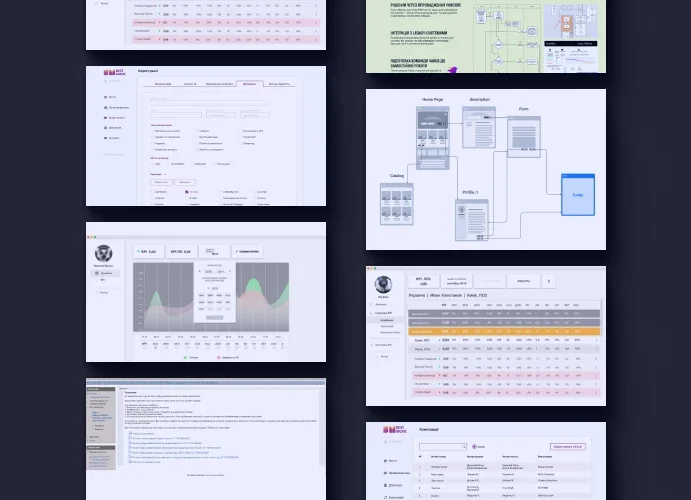
Servier Case: How Data Became a Strategic Asset Through a Complete Reporting System Upgrade

Servier Case: How Data Became a Strategic Asset Through a Complete Reporting System Upgrade

When we start working with world-class companies, we...

Business Intelligence (BI)
View more
Contact Background

Contact Us

Looking for a reliable technical partner? We are ready to join your project at any stage – from idea to launch.

Information icon

Information

Fill out the form, and we will contact you to discuss the project.

Address icon

Address

Senator Business Center, 32/2 Knyaziv Ostrozkykh St. Kyiv, Ukraine, 01010

Contact us

Add anything that will help us get started faster.

This site is protected by reCAPTCHA and the Google Privacy Policy and Terms of Service apply.

Frequently Asked Questions

See all answers

How does automation evolve after the first launch?

The first launch usually covers the main scenario that was bothering the team the most. After that, you can see how the solution behaves in real conditions: where additional rules are needed, which steps should be simplified, which exceptions repeat most often.

Based on this, the automation can be extended without restarting the whole project. New scenarios are added, other services are connected, and the logic is refined for different roles in the team.

What does turnkey business process automation include?

From analysis to launch — the full cycle without handovers between vendors. We describe how the process works now, find where it breaks down or slows down, design the new logic, develop, test, and launch it together with the client’s team. After that, the solution can be maintained and extended for new tasks.

Can I get a consultation on automation first?

Yes. At the start, we can hold a consultation or a workshop to understand which processes in your company are really worth automating.

During such a session, we usually go through the current logic of work, the problem areas, possible solution options, and a rough sequence of steps. This helps avoid investing in automation blindly.

How can automation be implemented without stopping current operations?

Automation is best launched gradually. First, the new logic is tested separately from the main process, then verified on a limited group of users or data, and only after that moved into full operation.

This approach makes it possible to find errors before a large-scale launch, prepare the team, and avoid breaking a process that already keeps the business running every day.


See all answers
Additionally

IWIS development principles

Business process automation that makes work predictable

Modern companies face difficulties when daily operations depend on emails, spreadsheets, and manual approvals. Workflows slow down, information is lost, and accountability between teams becomes unclear.

A structured approach to process digitization allows operational activities to be organized. Instead of manual coordination, teams work with automated processes that have clear rules, deadlines, and responsible parties. This reduces chaos and ensures stable task execution.

At IWIS, business automation begins with management logic: analyzing workflows, identifying inefficiencies, and preparing business processes for change. In complex environments, we create software that ensures long-term control and predictable system operation.

What Automation Solves for Modern Companies

As companies grow, operational complexity increases. Approval chains lengthen, information scatters across systems, and process transparency decreases.

This approach enables repeatable workflows to run with minimal manual involvement. It brings together approvals, task routing, and document flow automation in a single environment. This helps reduce delays, minimize errors, clearly define accountability, and increase operational transparency.

Unlike automating individual actions, this format begins with process optimization and building clear logic before implementing technology.

Business Automation Software

Systems must match how teams actually work. We design solutions around roles, scenarios, and decision-making rules to ensure stability at scale.

Standard functionality covers workflow automation, automated reporting, ERP integration, CRM integration, API integration, cloud automation, and real-time monitoring. This eliminates manual work, minimizes errors, and increases operational efficiency without complicating daily operations.

Business Process Automation Solutions

The focus is on end-to-end processes, not individual functions. Each project begins with analysis and modeling to identify bottlenecks before implementation starts.

Typical scenarios include financial approvals, internal document flow, procurement, and HR processes. Automation is combined with analytics, particularly through business intelligence systems, ensuring better control, transparency, and readiness to scale.

Why Companies Choose IWIS for Automation Projects

Our goal in each case is to understand what exactly needs to be automated, which bottlenecks are blocking growth, and how to translate these tasks into technical language so the solution actually works.

We handle the entire cycle of enterprise business process automation: analytics, architecture, development, testing, implementation, and support. This way, project context is not lost between stages. We form teams for the task: from MVPs for rapid hypothesis testing to complex integrations with CRM, ERP, financial modules, loyalty systems, or internal portals. We automate both front and back: customer operations, document flow, finance, HR, analytics.

In our projects, we have:

  • built internal accounting portals for financial teams in creative industries;
  • created KPI systems and personal dashboards for thousands of retail network employees;
  • replaced external ticketing platforms with custom e-commerce solutions integrated with loyalty programs;
  • designed data infrastructure and predictive models for customer base management;
  • automated approvals, training, and HR process support in companies with tens of thousands of employees.

We select solutions for the real needs of specific businesses. We design architecture from the start with future modules, team growth, new regions, or product lines in mind. As a result, the client gets a managed process that can be controlled and developed.

We work with transparent statuses, regular updates, and fast feedback. The client sees progress in real time, can adjust priorities, and make data-driven decisions. After launch, we hand over documentation, train the team, and remain available for support if needed.

ROI from Automation

Turnkey business process automation reduces team workload and impacts operational costs, process speed, and financial results.

Research shows that automation reduces business costs by an average of 20-35% by eliminating manual work, accelerating processes, and reducing errors. Analytics show that automated processes run 30-50% faster than traditional ones.
Over 59% of companies report positive ROI from automation in less than 12 months, and 73% of IT directors note efficiency gains exceeding 50%.
Automation payback is typically achieved within 6-18 months, and in some cases ROI exceeds 200% in the first year.

Over time, business automation becomes the foundation for stable company growth.

Previous
1 2 3 4 5 6
Next